


👟✨The Nexialist #0149
web summit takeaways | ai: hype or the real deal? | rag | accelerate sustainability with ai | trolling tech | artisanal intelligence | word of the year: authenticity | new rules of reality

welcome to another fresh batch of artisanally intelligent content, the nexialist
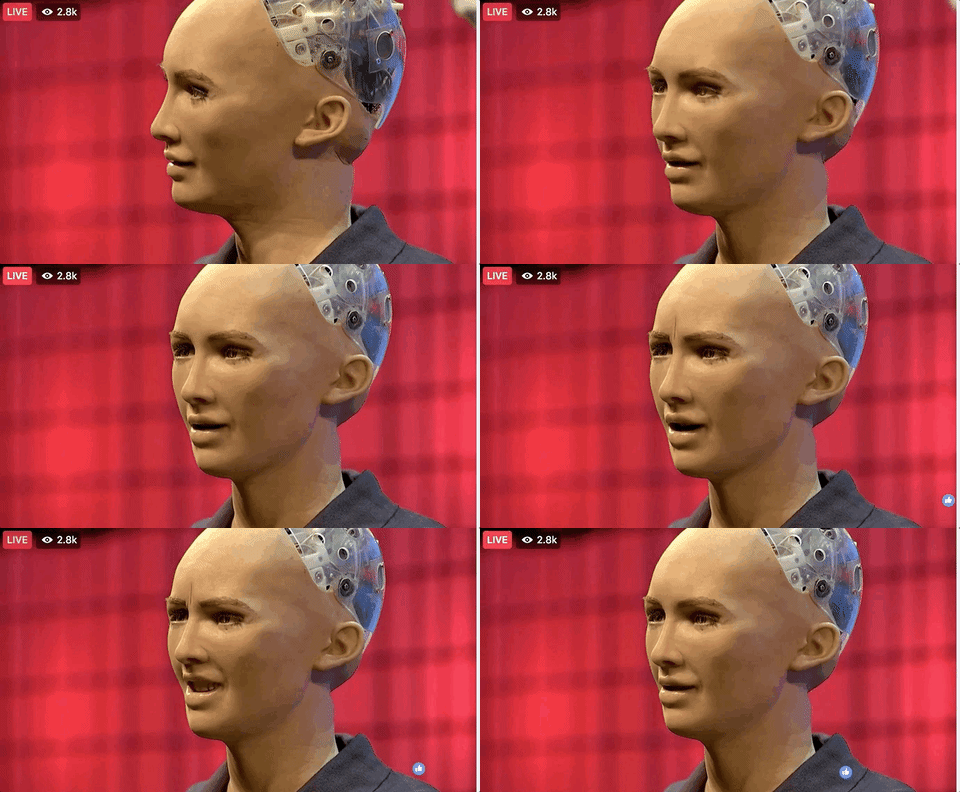
hello, world! i hope these glitches find you well. last week my head was somewhere else: i sent out tn#149, and skipped #148 by mistake. now it’s all fixed, so you’re getting the correct #149, it is not a reprise.
last week, lyon was a blast with juan: such a beautiful city with nice views, an incredibly lush park and delicious food. this week i’m back to cold amsterdam, even with some light snow, but happy to be reunited with my bike. i’m also done with my b1 dutch course as i just passed all the exams, so it has been a bit of a crazy period…
well, for today, i might be a bit delayed writing about the web summit two weeks after the event, but hey, i’m all for slow content. not important but i need to say this: sophia (the above robot on the gif) is just an illustrative image as she was not present but her sister desdemona was there. equally terrifying and fascinating.
now… enjoy 🫀✨
1 year ago » ☄️✨The Nexialist #0097 : Shay’s DA | Woodkid’s reactor | (post-)apocalyptic imaginary | the tech boom is over | can solarpunk save the world? | slouching towards utopia | biopiracy | the dirty road to clean energy | BoP 2022
2 years ago » 🕶✨The Nexialist #0047 : Collector Economy | Financialization of You | Social Mobility in the Digital Age | Mood Meter | Speed Learning | Touching You | Parasocial Relationships | Iconic Looks of Lady Gaga
💡(some) web summit takeaways
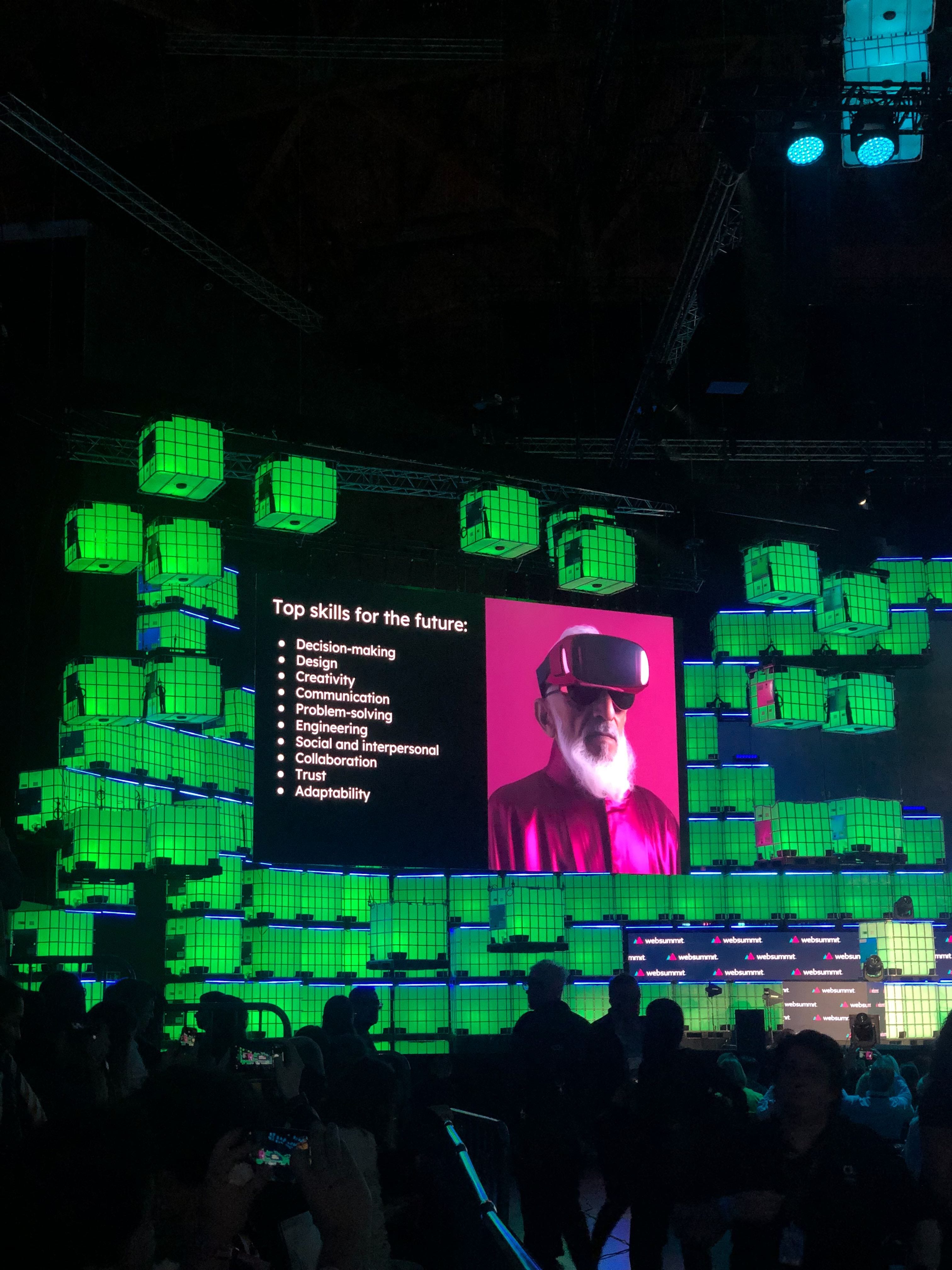
the web summit is a conference of conferences, that focuses on technology, innovation and everything around that. there are 16 stages, with 26 tracks happening in four days. it’s huge, it’s overwhelming, it’s impossible to see everything, and filtering through the amount the content we see there is a job in itself (there are great things, but there are also traps). what you’ll see here is a tiny selection of what i filtered together with the team of envisioning and cappra institute for sebraeX. these are the things that stayed with me:
ai(invasion): every stage and every track had talks about ai. most industries are already feeling the impact of this tech and are figuring out how to apply it in their context. if these innovations were taking a year of two to take shape, not it’s a matter of months. many startups were offering new ai solutions, for instance, the winner of the pitch competition was inspira, a brazilian legal ai-assistant.
to regulate or not to regulate? yes, this was actually quite a discussion with so many different opinions. some innovators believe it should not be regulated now (for climate, for instance), because it hinders progress. others believe it needs urgent regulation because ai is filled with bias and hallucinations which have an actual impact on people’s lives. of course there were moderate opinions in between, on how to do it collaboratively and be critical on what needs to be regulated. the fact is: ai is moving fast, too fast, and regulation is always two steps behind innovation, so even if we want, it’s a “catch me if you can” dynamic. and in the absence of proper regulation, some companies were sharing their own frameworks for applying ai in their processes.
co-pilot: the main mantra was “collaboration, not substitution” (i made that up, but it was said over and over again in different ways). ai is being shown a collaboration tool, and not so much for the complete automation of our jobs. this message serves as a way to keep us calm. there were more critical voices questioning that maybe the jobs of people at the conference would not be in danger, but we have to worry about other jobs that are not represented there.
vill(ai)n?: there is a lot of fear about ai. but one phrase from signal’s meredith whittaker stayed with me. another paraphrase: are these problems of ai? or are they problems with the current surveillance-based business model of the tech industry? or even the surveillance capitalist system that prevails? of course, ai and other technologies have their role in exacerbating certain problems, but it’s bigger than that and we have to be able to understand this in order to change it.
responsible ai: is there a way to create more ethical ais? some talks brought the conversation to equity and inclusion, accessibility, welfare x warfare, and sustainability. who is this innovation for? and how does it impact everyone’s lives? one question that stayed we me was: is this ai application a “cool” solution looking for a problem or does it solve a burning problem? if it’s the first, why even develop it?
🤖ai: hype or the real deal?
every year there is a main buzzing tech, not only in the media but also in the tech and innovation conferences. who remembers the nft fever, or the metaflop metaverse? well, this time maybe it’s different?
just a bit of context before i keep going: if you didn’t know, a couple of weeks before the event the founder and CEO of the Web Summit, paddy cosgrave, stepped down because he made controversial (but true) remarks about the israel-palestine conflict. well, he did that after big names from big tech cancelled their presence and money in the event (meta, tiktok, alphabet, intel, siemens, etc). #disapointedbutnotsurprised
i have to say their absence was quite symbolic (they weren’t missed, maybe by the event’s investors), because it let other voices and ideas come to the surface. signal’s meredith whittaker was one of these voices that stood out (the audience kept clapping after her statements, click here to play from the correct starting point). she was google’s whistleblower a few years ago, after leaving their ai ethics team, which was going through changes. she is highly critical of the current business model of the internet, based on surveillance, and called out the startups and investors at the event, urging people to think about what kind of industry they want to build. and she has the authority to say that: signal is a foundation, a donation-based, open-source, messaging app. perhaps a blueprint on how to change the industry?
🧠rag
hallucination is one of the main problems with ai (and more specifically llms, large language models, such as chatgpt.) it is so good with language, that it can make things up out of thin air and convince you it’s the truth. this can not only exacerbate the post-truth moment we’re in, but also be used by mistake by leaders and decision makers.
enter rag, retrieval augmented generation. a way to connect a database to llm’s, which helps it be more fact-based. i’m not very technical, as you can see, but it was compared with two halfs of the brain: llm’s would be the creative side, which it is very good at, rag/knowledge graphs the other side. neo4j was one of the companies who is using rag and knowledge graphs to improve veracity on llms. there’s a whole article on how they’re doing it here.
🌎playbook: accelerate sustainability with ai

melanie nakawaga, microsoft’s chief sustainability officer, shared some cases of how ai is being used to fight the climate emergency and help with sustainability and released a ai+sustainability playbook. i’m a sucker for playbooks, so here it is.
is it greenwashing? is it techwashing? is it megazordwashing? we don’t know, but by the presented cases, it did make me hopeful (for instance, fido uses ai to find water leakages.) btw, the environmental issue was very present at the event, and i heard a few times that this emergency takes cooperation: from investors to farmers. from the private and the public sectors. and ai can be applied in all of these layers to accelerate the process.
👟trolling tech

talking about techwashing, this troll was a highlight. the yes men activists trolled the whole event. they pretended to be dj marshmallo and an adidas executive, releasing a crypto coin to pay their workers. they were, of course, protesting against work conditions in fast fashion sweatshops. more than that, they’re exposing how we, as a society, lack critical thinking about technological innovation and are easily subject to techwashing. i was not in this talk, but i hope people learned a lesson.
Despite "Aristide's" explicit, slide-assisted descriptions of adidas's Nazi origins and "outsourcing" to forced labor in WWII, their "almost" solved child-labor problems, and their current workplace abuses — not to mention the horrific video overhead — the thousand-strong audience simply applauded, then crowded "Marshmello" for autographs.
🌶️artisanal intelligence
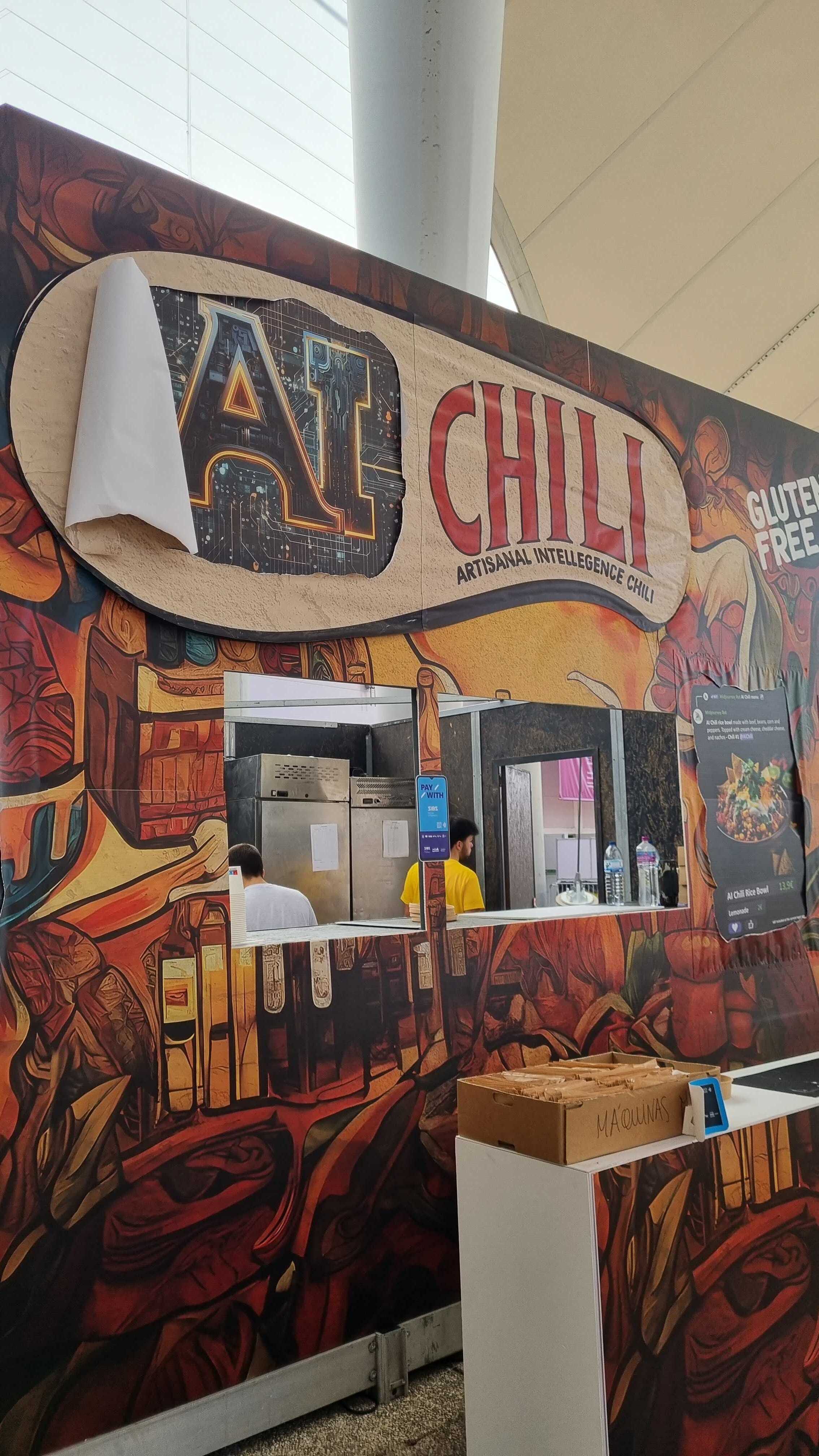
this was such a silly thing that caught my attention: they used chatgpt to find the perfect chili recipe and called it artisanal intelligence chili, showing that we can use it to create nice things. i did not eat it though, and i regret it.
🫀word of the year: authenticity
enough of web summit. in the year of barbie’s authentic artificiality (tn#130) and the pope in a fabulous puffer overcoat (tn#114) the word of the year had to be authenticity. if you work in communication, you’re already tired of it's been years in the making.
Authentic is what brands, social media influencers, and celebrities aspire to be. Elon Musk made headlines when he said that people should be more “authentic” on social media. Apps and platforms like BeReal make recording “authentic” experiences their main purpose. No matter how much artifice and calculation goes into the production of these videos, as Rebecca Jennings of Vox puts it, “wherever people are supposedly being ‘authentic’ on the internet, the money will follow.” Ironically, with “authentic content creators” now recognized as the gold standard for building trust, “authenticity” has become a performance.
👁️the new rules of reality

i had the honor to go to my first tedx event, here in amsterdam. it was great to see a couple of known faces (hello brian and kyle) and to hear the speaker’s ideas/experiences. the theme of this edition was reality, and it was heartwarming and mindblowing.
from the shift in perception of the importance of invertebrates by a marine biologist, to a first-hand story of algorithmic bias and racism in the netherlands, to an inspiring non-binary drag queen shaping fantasy and reality, to making fabric with human hair. there were 8 stories that touched me. wearepi released a report with quotes from the speakers and some insights from the reality theme. i did not know about wearepi and they new society rules platform, but the other reports look amazing.
This year’s theme, ‘reality,’ inspires reflection on how we perceive and shape the world around us. Encouraging a shift from one-sided views to a more open-minded understanding of diverse realities, this NSR issue explores why multiple realities are a source of optimism, and not fear.
see you next week, vertebrates 🫀✨
❓If you want to know what a Nexialist is, click here.
🔎If you want to see what I’ve already posted, visit the archive and use the search engine. Even I do that a lot.
💌I want to know what you think/who you are! Your feedback is highly appreciated; you can e-mail me or fill in this short survey. Thank you! 🙏🏻
🔌Let’s Collab?
I truly believe innovation comes from bringing improbable areas together, and that’s why I called this project The Nexialist. Some sectors are known to be self-referencing and hermetic. Sometimes teams are on autopilot mode, focused on the daily grind, which hinders innovation. As a Nexialist, I like to burst these bubbles, bringing references from different areas, and maintaining teams inspired and connected to the Zeitgeist.
I offer inspiration sessions called Brainsparks, creative desk research (Zeitgeist Boost), Plug’n’Play deals for workshops and sprints, and other bespoke formats. If you want to know more about this, send me an e-mail with your challenge(s) and we can figure something out together. Check out my website and some work I’ve done below:
Wow, loved watching the conversation with Meredith Whittaker! My new heroine! 😍